When scaling a drinkware brand or planning a new custom tumbler launch, it’s easy to focus entirely on the cup itself—the mill finish, the 40oz capacity, or the double-wall insulation performance. But in the reality of retail, the lid is where a product either succeeds or fails.
An poorly matched lid does more than just spill water; it triggers bad Amazon reviews, drives return rates, and quietly erodes your brand equity. Conversely, getting the lid mechanics right can completely change how consumers use your drinkware, whether they carry it to the gym, or keep it on an office desk.
At Everich Hydro, we engineer thousands of stainless steel tumblers daily. In this guide, we’ll break down the specific lid architectures, materials, and sourcing pitfalls that wholesale buyers and brand managers need to know before opening a new mold.
The Core Anatomy of Modern Tumbler Lids
Before looking at specific mechanism types, it is vital to evaluate the base materials and sealing engineering. In the premium custom tumbler market, three manufacturing metrics matter most:
Material Composition: Premium lids must be molded from high-grade, BPA-free plastic, typically Tritan™ copolyester, Food-Grade PP (Polypropylene), or SAN (Styrene Acrylonitrile). Tritan is the gold standard for clarity, impact resistance, and dishwasher safety.
Gasket Engineering: The seal relies on high-tensile silicone O-rings. Double-gasket structures ensure tighter seals and adapt better to pressure changes caused by hot vapors.
Thread/Fit Attachment: Lids attach either via Press-fit (friction-locked with a silicone gasket) or Screw-on (threaded mechanisms). Press-fit lids offer a sleek, low-profile aesthetic, while screw-on variants deliver maximum structural leak-proofing.
Deep Dive: 6 Essential Tumbler Lid Mechanisms & Their Target Audiences
Different user scenarios demand distinct drinking mechanics. When engineering your custom tumbler line, choose the mechanism that aligns with your target demographic’s lifestyle.
① Slide Lids (The Classic Commuter Choice)
How it Works: Features a horizontal sliding closure that uncovers a sipping slot. Some advanced models utilize magnetic sliders for easy cleaning.
Best For: Hot coffee, tea, and office desk use.
B2B Branding Insight: The flat surface of a slide lid offers a secondary location for laser-engraving or pad-printing small brand icons.
Limitation: While splash-resistant against bumps in a car cup holder, classic slide lids are not completely leak-proof if inverted inside a bag.
② Flip Lids (The High-Thermal Insulator)
How it Works: A hinged cap snaps securely over the drinking port. When opened, it folds back completely to stay clear of the user’s nose.
Best For: Piping hot beverages and heavy transit commuting.
B2B Branding Insight: The audible “click” of a well-molded flip lid signals high quality to the consumer. Because it seals tightly, it minimizes radiant heat loss, increasing thermal performance.
③ Straw Lids & Straw Holes (The Active Hydration Standard)
How it Works: Offers a designated port for a reusable straw (silicone, Tritan, or stainless steel). Modern versions feature built-in flip-up straw spouts attached to internal physical straws.
Best For: Cold brews, smoothies, iced waters, and driving.
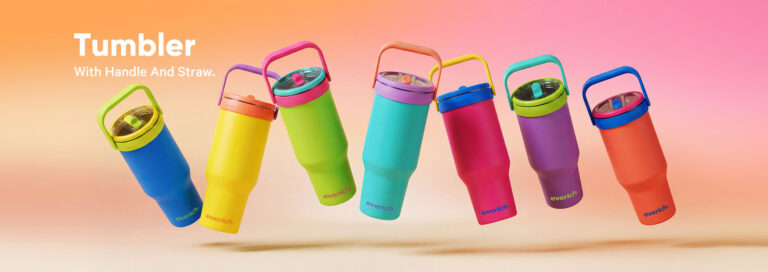
B2B Branding Insight: Popularized by the “travel tumbler” trend (such as the 40oz handled tumblers), straw lids drive massive volume among lifestyle, fitness, and Gen Z demographics.
④ 360-Degree Sipping Lids (The Premium Barista Experience)
How it Works: A push-button or twist mechanism unseals the rim circumferentially, allowing the user to sip from any angle without looking down.
Best For: Luxury automotive corporate gifts, high-end cafe retail.
B2B Branding Insight: Excellent engineering value. It mimics drinking from an open ceramic mug while maintaining full thermal retention when pressed shut.
⑤ Chug/Spout Lids (The Outdoor & Sports Cross-Over)
How it Works: A narrow, high-flow threaded or capped spout designed for rapid fluid intake without splashing.
Best For: Cross-functional travel tumblers, outdoor adventure brands, gym environments.
B2B Branding Insight: Typically paired with heavy-duty integrated loop handles, making the custom tumbler highly rugged and portable.
⑥ Dual-Purpose/Hybrid Lids (The Ultimate Versatility Play)
How it Works: Multi-functional engineering that integrates both a built-in straw port and a dedicated direct-sipping mouth opening within a single molded lid structure.
Best For: Maximizing retail marketability and reducing consumer choice hesitation.
Comparative Matrix for B2B Product Developers
To help you make an immediate sourcing decision, this structural breakdown compares lid styles against key performance indicators (KPIs):
Lid Mechanism Type | Spill & Leak Proofing | Thermal Retention (Hot) | Target Demographic | Ideal Tumbler Pairing |
Slide Lid | Moderate (Splash-proof) | Good | Office Professionals | 20oz Slim/Tapered Tumbler |
Flip Lid | High (Leak-resistant) | Excellent | Daily Commuters | 12oz / 16oz Travel Coffee Mugs |
Straw Lid (Built-in) | High (When folded) | Fair (Best for Cold) | Fitness, Wellness, Gen Z | 30oz / 40oz Handle Tumblers |
360° Sipping Lid | High (When sealed) | Good | Tech/Executive Gifts | Minimalist Matte-Finished Cups |
Chug / Spout Lid | Maximum (Screw-down) | Excellent | Campers, Outdoor Athletes | Wide-mouth Heavy-duty Tumblers |
Hybrid Lid | High | Good | Mass Retail Consumers | Multi-use Everyday Hydration Cups |
Strategic Engineering & Customization Factors for Wholesale Sourcing
When customizing your line with Everich Hydro, choosing a lid involves evaluating structural engineering and commercial goals:
Hot Liquids & Carbonation: Managing Pressure
Don’t pair friction-fit (press-fit) lids with piping-hot coffee or carbonated drinks. Thermal expansion and trapped gas build up internal pressure, which will literally pop a press-fit lid open right inside a user’s car. For these beverage categories, your catalog needs threaded screw-on lids paired with integrated steam release valves or flip-tabs that allow pressure to equalize safely.
The Shift to Eco-Conscious Materials (PCR & Compliance)
Greenwashing no longer works for premium brands. If you are targeting European or North American retail markets, look into PCR (Post-Consumer Recycled) PP or Tritan for your lid assemblies. However, recycled tech is tricky—always demand that your manufacturer produces verifiable FDA, LFGB, or REACH certifications to guarantee that the recycled resins are 100% safe for direct food contact.
Scaling Up: Ergonomics for 30oz and 40oz Vessels
An oversized tumbler gets heavy fast. When sourcing 30oz or 40oz vessels, the lid shouldn’t just close the cup—it needs to support the weight. Incorporating soft-touch flexible finger loops or heavy-duty swing handles directly into the lid mold prevents wrist fatigue and shifts the product from a static desk mug to an active, everyday carry (EDC) item.
Finishes: Color-Matching vs. Transparency
Crystal-clear lids are excellent for showcasing beverage levels, but they can sometimes look cheap on premium metallic lines. To elevate your brand’s perceived value, consider solid color-compounded lids that perfectly match the body’s powder coating. For eco-focused collections, accenting the sliders or flaps with bio-based wood-grain composites creates an instant visual selling point.
Frequently Asked Questions (FAQ)
Q1: Will one lid design fit multiple tumbler SKUs?
Yes. You don’t always need a unique lid for every cup size. Many popular 20oz and 30oz tumbler bodies are engineered with identical top diameters. Choosing a universal lid size allows you to cross-utilize the same component across different products, simplifying your supply chain and lowering your minimum order quantities (MOQs).
Q2: Leak-proof vs. Splash-proof: How do we market them?
Be transparent with your retail customers to avoid complaints:
Splash-proof: Designed for office desks and car rides. It handles shaking and walking but isn’t meant for rough handling.
Leak-proof: Uses threaded screw tracks or heavy mechanical locks to completely isolate fluids. It’s built for active travel and rugged outdoor use.
Q3: How do we ensure our custom lids don’t trap mold and dirt?
Look for “clean-friendly” component designs. The number one reason consumers throw away travel mugs is hidden mold under the seals. Choose lid designs that allow users to pop out the sliding parts and strip the silicone rings without tools. Ensuring the materials are top-shelf and dishwasher-safe will drastically improve your product’s lifespan and brand loyalty.
Partner with Everich Hydro for Your Next Drinkware Launch
Choosing the perfect lid configuration requires balancing user ergonomics, tight engineering tolerances, and precise brand positioning. At Everich Hydro, we combine decades of advanced OEM/ODM manufacturing expertise with state-of-the-art injection molding facilities.
Whether you need to source a trending hybrid straw lid, develop a proprietary custom 360-degree sipping system, or implement eco-friendly PCR materials, our engineering team handles everything from initial 3D prototypes to rigorous food-grade safety compliance testing.
Ready to elevate your custom drinkware project? Contact our product consultants today for an engineering blueprint and an instant volume quote.
FAQ
Why go with a Chinese manufacturer?
Mainly three things: lower cost, decent tech, and you can change pretty much anything – shape, logo, color, packaging.
What's the best material for sports bottles?
Food-grade stainless steel and BPA free Tritan plastic. Both safe and tough.
Can they put my logo on the bottle?
Yeah, most do. Silk-screen, laser engraving, UV printing – you name it. They can also do custom boxes and unique designs.
What about certifications? Which ones matter?
FDA, LFGB, ISO 9001, BSCI. Not every decent factory has all of them. But if you see these, it’s a good sign.
What's the usual MOQ?
It really depends. Some places start at 500 pieces. Others want 5,000. All comes down to how much custom work you need – logo, packaging, colors. The more you change, the higher the MOQ.
Are Chinese manufacturers reliable?
A lot of them are, yeah. Big global brands already use them. But don’t just assume. Ask for samples. Check those certs. If you’re not sure, pay a third-party to inspect the shipment. Do your homework. That’s on you.
Conclusion
If you’re looking for sports water bottle suppliers, China is still the main hub. Whether you’re a small startup or you’ve been selling for years – the right factory makes or breaks your margins and quality.
Everich, Fuguang, Guangzhou Diller… they keep pushing on design, custom work, and build quality. But don’t just trust the name. Grab samples. Ask about lead times. Talk to their sales people directly. Find the one that actually fits your business.
Want to compare more suppliers? Hop on Alibaba. Check prices, send inquiries, and you’ll start to figure out who’s legit.