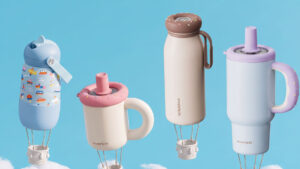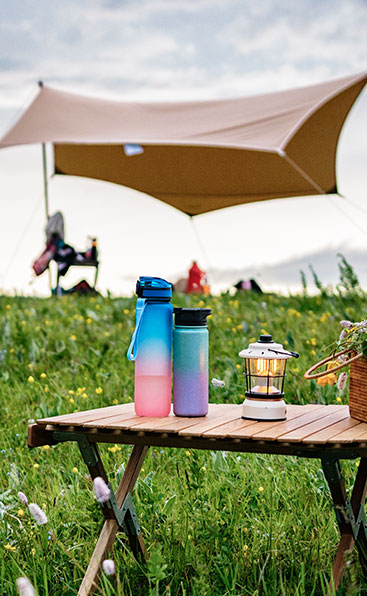
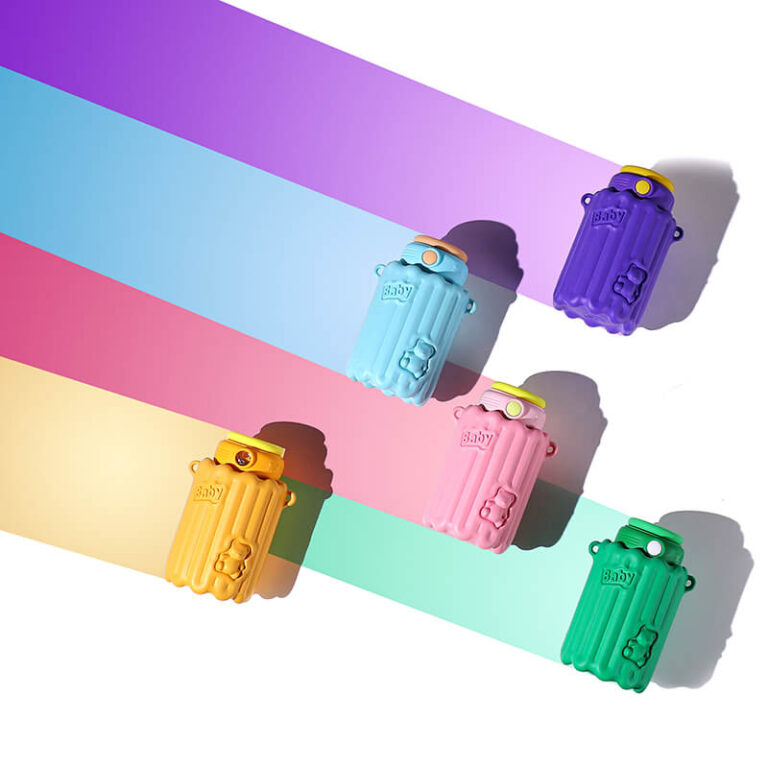
For many families, a kids water bottle is an essential item, valued for being easy to carry, durable, and available in a wide range of functions, colors, and styles.
As soon as autumn and winter arrive, making sure your child has water with them becomes a daily task for parents. You need it for a walk around the neighborhood, for their water bottle bag when you drop them off at kindergarten, and it’s absolutely indispensable for a day out at the park.
This is where the insulated water bottle, a true “hydration hero,” comes in. Choosing the right one means your child can enjoy a drink at a comfortable temperature anytime. Choosing the wrong one, however, doesn’t just mean lukewarm water—it can also hide potential safety hazards.
The core principle for picking a kids’ thermos is “safety first, matched to their needs.” Every detail, from the material to the features, needs to fit your child’s specific usage scenarios and physiological characteristics.
What Material Water Bottle Is Best for Kids?
Since you mentioned “safety first,” this section is crucial. When choosing a bottle for your little one, the safety of the materials is the top priority. The inner liner comes into direct contact with water and drinks, while the lid, straw, and seal are frequently in your child’s mouth. If these parts are made of substandard materials, they may release harmful substances. Here is a breakdown of the pros and cons of common materials to look for:
304 vs. 316L Stainless Steel: Why “food grade” isn’t the only thing to look for.
The inner liner is the heart of the thermos. While “food grade” is a basic requirement, the specific type of stainless steel matters greatly for durability and safety. The priority ranking is: Titanium > 316 stainless steel > 304 stainless steel.
- Titanium: This is the premium choice for safety and lightness. It is chemically stable, resistant to acid and corrosion, and won’t react with drinks like apple juice or yogurt, ensuring no harmful substances leach out. It’s also about 40% lighter than stainless steel, making it easy for small children to handle, though it comes at a higher price.
- 316 Stainless Steel: This is the ideal choice for daily use. It contains molybdenum, which makes it more corrosion-resistant than 304 stainless steel and can withstand temperatures up to 130°C (266°F). It’s perfectly safe for warm water, rice paste, or soup, and its price is more affordable than titanium.
- 304 Stainless Steel: This is the basic, safe option. It meets food-grade standards but is less resistant to corrosion and high heat than 316. It is best suited for plain warm water, not acidic or high-temperature drinks. If you choose this, ensure it is clearly labeled “food-grade 304 stainless steel.”
Avoid: Products with no material label or those vaguely marked “food contact stainless steel” without a specific model/type, as these may not meet safety standards.
BPA-Free Plastics (Tritan): Great for lightweight needs, but not for hot water.
This primarily applies to the cup lid and body. The lid and straw come into frequent contact with your child’s mouth, so they need to be soft, safe, and odorless.
- For the Straw/Spout: Always choose food-grade silicone. It is soft, elastic, bite-resistant (perfect for teething), non-toxic, odorless, and stable at high temperatures. Avoid plastic straws, which can be chewed through and may release odors in hot water.
- For the Lid Body: Prioritize Tritan, followed by food-grade PP. Tritan is a BPA-Free plastic known for its high transparency, durability, and heat resistance (up to 100°C / 212°F). PP is a cost-effective option that is also heat resistant, but it’s less durable and may wear down over time. Always confirm it is labeled “BPA-Free.”
Avoid: If the lid or straw has a strong chemical smell, don’t buy it, even if it claims to be food grade.
Silicone Components: Checking the quality of straws and seals.
The sealing ring is critical for preventing leaks. It must be made of food-grade silicone. High-quality silicone is soft, flexible, odorless, heat-resistant, and durable. If the seal is made of ordinary rubber, it may release harmful substances when heated and is more prone to leaking.
- Check: Look for a “food contact silicone” label on the seal. You can also test the bottle’s seal at home by filling it with water, turning it upside down, and checking for leaks.
A Note on Cup Types:
There are many types of kids’ water bottles, including sippy cups, straw cups, 360° training cups, and open cups. You can choose based on your child’s age and development:
- Sippy Cup: Helps babies transition to a straw cup.
- Straw Cup: Can be introduced around 6 months of age.
- 360° Training Cup: Helps transition to an open cup.
- Open Cup: Can be attempted around 18 months of age.
Age-Appropriate Features: From Toddlers to Schoolers
A bottle that works perfectly for a 2-year-old won’t meet the needs of a 7-year-old. As children grow, their hand strength, drinking habits, and usage scenarios change dramatically. Choosing a bottle with the right capacity, features, and design for each stage helps little ones learn to drink independently and happily. That is why we offer a diverse range of bulk water bottles for kids—ensuring every age group finds its perfect match in both functionality and style.
Infants/Toddlers: Focus on dual handles and gravity balls.
Babies who are just learning to drink from a cup have weak hand strength and are still developing their swallowing coordination. The priority here is easy grip, anti-choke design, and small capacity.
- Capacity: Look for 150ml-200ml. This is light enough for tiny hands to hold, and if they don’t finish it all at once, it’s not wasteful.
Key Features:
- Anti-Choke Straws/Spouts: Choose cups with V-shaped straws or gravity ball straws. V-shaped straws only release water when your baby sucks, which prevents leaks and choking. Gravity ball straws allow drinking from any angle—whether sitting up or lying down—which is perfect for younger infants.
- Easy-Grip Body: Cups with detachable silicone handles or a slim body diameter (about 6cm-7cm) are much easier for small hands to hold.
- One-Button Lid: A simple, easy-to-press lid is helpful for parents now, and as your baby grows, they can learn to open it themselves.
Preschoolers: Easy-to-open “one-click” lids and straw types.
While many kindergartens provide water, preschoolers are out and about more often on weekends and trips. The focus shifts to leak-proof, bite-resistant, and easy-to-operate designs that won’t leak in a backpack.
- Capacity: 200ml-300ml is ideal for a half-day to full-day outing. It’s a manageable weight for little shoulders to carry themselves.
Key Features:
- Super Leak-Proof: Look for a double-seal design (seals on both the lid and the straw). This ensures no leaks even if the bottle is shaken or turned upside down in a bag.
- Bite-Resistant Straws: Straws should be made of thickened, food-grade silicone that can withstand enthusiastic chewing without breaking down.
- Simple Operation: A one-push pop-up lid is still best at this age, allowing your child to open and drink without asking for help, fostering independence.
School-Age Kids: Larger capacity and direct-drinking spouts.
School-aged children have long days, high activity levels, and increased water needs. They require a large capacity, versatile, and durable bottle.
- Capacity: 350ml-500ml will cover a full school day’s hydration without needing frequent refills.
Key Features:
- Versatile Lids: Bottles with interchangeable lids are a game-changer. A straw lid is great for casual drinking, while a direct-drink spout is more convenient for quick gulps during sports or class breaks.
- Durable Body: An outer layer of stainless steel ensures the bottle can withstand the bumps and drops of daily school life.
- Portable Design: Removable shoulder straps or sturdy handles make it easy for kids to carry to and from school or clip onto their backpack.
Insulation Performance: Keeping the “Comfort Zone”
Many parents instinctively seek out bottles advertised with “24-hour insulation,” assuming longer is always better. However, this isn’t quite the case for little ones. The ideal drinking temperature for a child is around 40°C (104°F). If you fill the bottle with water at this temperature, it’s perfect. But if you use hot water, excessive insulation can mean that hours later, the water is still hot enough to scald your child’s mouth. It can also cause drinks like rice paste or juice to spoil if kept warm for too long.
This is why it’s more important to look at “effective insulation duration” based on your actual usage. The “24-hour保温” claim on a label usually means the water can stay above a certain temperature (like 40°C) after 24 hours in lab conditions. In real life, however, your child opens the cup frequently to drink, and each time they do, heat escapes. This significantly impacts real-world performance.
For a child’s needs, a 6-hour insulation rating is often more practical. Water packed in the morning will be just right—neither too hot nor too cold—when your child drinks it at noon or in the afternoon. As a rule of thumb: if a bottle is rated “6-hour insulation ≥55°C,” in real-world use (with frequent opening), you can expect the water to be around 40°C-50°C after 6 hours, which is ideal. Conversely, a bottle rated “24-hour insulation ≥40°C” might keep boiling water from the morning at over 70°C by midday, posing a burn risk and requiring you to pour it out to cool down first—which defeats the purpose of convenience.
Vacuum Insulation Technology: How it works to keep water warm in winter and cool in summer.
High-quality kids’ bottles use vacuum insulation technology—essentially a double-walled construction with the air removed from the space between. This vacuum acts as a barrier against temperature transfer, keeping hot water hot and cold water cold. This same technology that keeps cocoa warm on a winter outing also ensures water stays refreshingly cool during a summer trip to the park.
The “Goldilocks” Temperature: A reminder to parents not to put boiling water in straw bottles.
It’s crucial to remember the “Goldilocks” principle: not too hot, not too cold, but just right. Never fill a straw bottle with boiling water. The pressure can force hot liquid through the straw, seriously burning your child’s mouth and throat. Furthermore, the ideal temperature depends on your scenario:
- At Home or Short Outings: If your child drinks smaller amounts throughout the day, a bottle rated “6-hour insulation ≥50°C” is perfect. The temperature stays safe and comfortable, ready to drink at any time.
- Long Outdoor Adventures: For day trips like hiking or picnics, choose a bottle rated “12-hour insulation ≥50°C” to ensure access to warm water. Just remember to pre-cool the water to around 50°C before filling to prevent it from being too hot hours later.
Conclusion
Choosing the “best” water bottle isn’t about finding the most expensive model or the one with the longest insulation stats. It’s about finding that perfect intersection where safety meets daily reality. As you make your final choice, keep these three golden rules in mind:
- Prioritize the “Inside”: Opt for 316L stainless steel or Titanium for the liner to ensure every sip is as pure as the last.
- Match the Milestone: Ensure the lid and flow style (gravity ball vs. direct drink) match your child’s current motor skills to avoid frustration or choking.
- Test the “Parent Factor”: If it’s too hard to take apart and clean, or if it leaks in a backpack, it won’t stay your favorite for long.
A great water bottle does more than just hold liquid—it encourages independence and keeps your little adventurer hydrated and healthy through every season. Whether it’s a warm sip of water on a chilly walk to kindergarten or a cool drink during a summer park date, the right bottle is a small investment that makes a big difference in their daily comfort.