
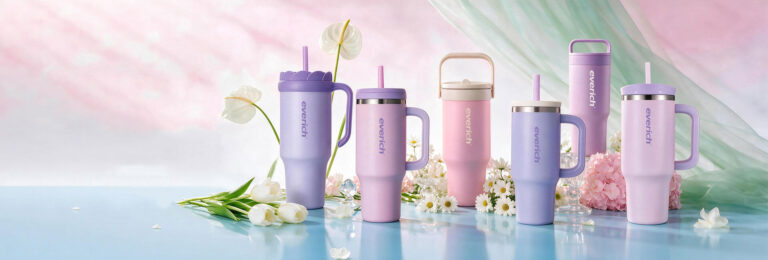
When people ask why Stanley tumblers are so expensive, they are usually asking two different questions. Consumers want to know whether the retail price is worth it. B2B buyers searching for a Stanley manufacturer or wholesale Stanley tumblers want to know whether they can buy branded products in bulk, source from the same factory, or create a profitable custom alternative.
The short answer: Stanley tumblers are expensive because the price is not only about stainless steel. Buyers are paying for brand heritage, product design, insulation performance, durable materials, color strategy, warranty support, retail distribution, and strong consumer demand.
For B2B buyers, there is one more point to make clear:
Stanley is a protected brand. If you need genuine Stanley-branded products in bulk, use Stanley 1913 or authorized dealer channels. Everich Hydro does not sell counterfeit Stanley-branded tumblers. Everich Hydro supports custom stainless steel drinkware, OEM/ODM tumblers, and private-label alternatives for brands that want their own legal, differentiated products.
Stanley’s Price Is Not Just a Manufacturing Cost
A stainless steel tumbler may look simple from the outside, but the final retail price includes many layers:
- Brand value and consumer trust
- Product design and tooling
- 18/8 stainless steel and food-contact components
- Vacuum insulation technology
- Lid, straw, handle, and accessory design
- Surface finish and color development
- Quality testing and warranty support
- Packaging, logistics, duties, and retail margin
- Marketing, collaborations, limited editions, and demand
That is why a branded tumbler can cost much more than an unbranded stainless steel cup even when both are made from similar base materials.
For consumers, the question is: “Do I value the brand, features, and daily-use experience enough to pay more?”
For B2B buyers, the better question is: “Which parts of the Stanley success formula can we learn from, and how can we build our own product without copying the brand?”
Why Stanley Tumblers Cost More
1. Brand Heritage Creates Trust
Stanley is not a new viral brand that appeared overnight. On its official About page, Stanley 1913 traces its history back to William Stanley Jr.’s invention of the all-steel, double-wall vacuum bottle in 1913. That long heritage gives the brand credibility in durability, outdoor use, and temperature retention.
This matters because drinkware is not only a functional product. Consumers put it next to food, coffee, water, desks, cars, gym bags, and daily routines. Trust has commercial value.
For a consumer, that trust can make the price easier to accept. For a buyer, it shows why a private-label tumbler cannot compete only by being cheaper. It also needs a clear promise: better design, a specific use case, a stronger price-value ratio, better packaging, or a more focused audience.
2. Stanley Became a Lifestyle Product
Stanley used to be known mainly for rugged outdoor bottles and worksite-friendly drinkware. Today, its tumbler line also functions as a lifestyle accessory. The National Retail Federation described Stanley’s evolution as a move from rugged drinkware into a global lifestyle phenomenon, driven by color, everyday use, product innovation, and cultural relevance.
That shift changes pricing power. A basic tumbler competes on capacity and insulation. A lifestyle tumbler competes on identity, color, routine, and social proof.
This is one reason Stanley products can sell at premium prices while cheaper stainless steel tumblers sit on the same shelf. The product is not only holding water. It is holding a place in the customer’s daily routine and self-expression.
3. Materials and Insulation Matter
Stanley’s FAQ states that its stainless-steel items use 18/8, or grade 304, food-grade stainless steel, and that contact surfaces are safe and BPA-free. The FAQ also says its stainless-steel items must pass health and safety tests before being made available to the public.
Premium drinkware buyers notice material quality in several ways:
- The cup feels solid instead of thin or flimsy.
- The surface finish resists everyday wear better.
- The interior does not create an unwanted odor or taste.
- The insulation keeps drinks hot or cold for longer.
- The lid and drinking components feel safe and comfortable.
For B2B buyers, this is a reminder that material shortcuts can hurt the final brand experience. A lower steel grade, weak coating, poor lid fit, or inconsistent vacuum insulation can reduce cost at first but create returns, bad reviews, and repeat-order problems later.
4. The Lid, Straw, Handle, and Cup-Holder Fit Add Value
Many consumers do not buy a large tumbler only because it is insulated. They buy it because it fits into daily life. A successful tumbler needs to work in a car cup holder, sit on a desk, be easy to carry, feel stable, and offer a convenient drinking experience.
That is why the small parts matter:
- Lid structure
- Straw compatibility
- Splash resistance or leak resistance
- Handle comfort
- Cup-holder base shape
- Grip and balance
- Replacement parts and accessories
For manufacturers, these details require design, tooling, testing, and assembly control. For brands, they create perceived value. A tumbler that is easier to carry and use every day can command a higher price than a simple straight-wall cup with a basic lid.
5. Color Strategy and Limited Drops Increase Demand
Stanley is also expensive because demand is not evenly distributed. Some colors, collaborations, and seasonal drops become more desirable than standard versions. When limited editions sell out, resale prices can rise sharply.
For consumers, this means some prices reflect scarcity and trend demand, not just product cost. For B2B buyers, the lesson is more practical: color planning can drive repeat purchases.
A private-label tumbler line can use:
- Core evergreen colors
- Seasonal colors
- Retailer-exclusive colorways
- Limited gift sets
- Matching accessories
- Premium packaging for holidays or corporate gifts
The goal is not to copy Stanley’s colors or branding. The goal is to understand how color and merchandising can turn a simple product into a collection.
6. Warranty and Service Are Part of the Price
Stanley’s FAQ says its drinkware and food containers, excluding lids, seals, and straws, are covered for the life of the product under its warranty terms. Warranty support is a real business cost. It requires systems, replacement handling, customer service, and quality control.
When consumers pay for a premium product, they often expect support after purchase. When retailers buy premium drinkware, they expect fewer complaints, clearer warranty terms, and a supplier that can help manage defects.
For B2B buyers developing their own tumbler line, the practical takeaway is simple: build a product quality level that matches the promise you plan to make.
Are Stanley Tumblers Worth It for Consumers?
Stanley tumblers can be worth it for consumers who value a known brand, strong daily-use design, large capacity, insulation, color variety, and warranty support. If you use a tumbler every day for commuting, work, school, gym, or travel, the cost per use can become reasonable over time.
However, if you only need a basic stainless steel cup for occasional use, a lower-priced tumbler may be enough. The best choice depends on what you care about:
- Choose Stanley if brand, color, design, accessories, and warranty matter.
- Choose another premium tumbler if you want similar functionality with a different style.
- Choose a basic tumbler if you only need simple insulation at a lower price.
Consumers should also buy from official or reputable sellers. A suspiciously cheap “Stanley” product may be counterfeit, unsupported, or outside warranty coverage.
Can B2B Buyers Buy Wholesale Stanley Tumblers?
Some B2B buyers search for wholesale Stanley tumblers because they want branded drinkware for resale, corporate gifts, promotional programs, or retail distribution. This is different from sourcing ordinary stainless steel tumblers.
If you need genuine Stanley-branded products, the safe route is to work through Stanley 1913, official regional dealer channels, or authorized distributors. Stanley’s own FAQ also says it may refuse or cancel bulk orders placed through its website when products appear intended for resale or distribution unless the buyer is a pre-qualified vendor.
That matters because buying “factory-direct Stanley” from unknown marketplace sellers can create serious risks:
- Counterfeit goods
- Trademark infringement
- No warranty support
- Inconsistent quality
- Customs seizure risk
- Retail account problems
- Brand reputation damage
For official Stanley-branded wholesale, do not treat random supplier listings as proof of authorization. Ask for authorization documents, approved distribution rights, invoice trails, and territory rules.
Who Is the Stanley Manufacturer?
That search term can be confusing because buyers usually mean one of two things.
First, they may be asking who owns or produces genuine Stanley-branded products. Stanley 1913 identifies itself as a brand of PMI, and official information should come from Stanley 1913 or PMI-related sources. Public pages do not give B2B buyers a simple open-door factory route for buying branded Stanley products directly from a generic manufacturer.
Second, buyers may be asking whether they can find a tumbler factory to make a similar product under their own brand. That is a different and more realistic sourcing path.
Everich Hydro should not be described as an official Stanley supplier unless an official, verifiable relationship exists. The right positioning is this: Everich Hydro is a custom stainless steel drinkware manufacturer that can support private-label insulated tumblers, coffee tumblers, mugs, lids, colors, packaging, and OEM/ODM development.
In short:
- For genuine Stanley-branded products, use official Stanley or authorized dealer channels.
- For your own custom tumbler brand, work with an OEM/ODM drinkware manufacturer.
What Private-Label Brands Can Learn from Stanley
B2B buyers do not need to copy Stanley to learn from Stanley. The stronger approach is to study what made the category more valuable, then build a differentiated product for your own market.
Build Around Daily Use
The most successful tumblers are not designed only for the kitchen. They are designed for cars, desks, gyms, campuses, offices, travel, events, and gifting. A good product brief should define where the tumbler will be used and how the user will carry, drink, clean, and store it.
Treat Color as a Product Strategy
Color is not an afterthought. It affects shelf appeal, social sharing, gifting, and repeat purchase. Brands can plan colors by audience, season, channel, and price tier.
Invest in Lid Experience
For many users, the lid decides whether the product becomes a daily favorite or a drawer filler. A lid should be comfortable, easy to clean, compatible with the drinking method, and tested for the intended leak or splash-resistance level.
Make the Product Feel Retail-Ready
A premium tumbler needs more than a logo. It needs a coherent package:
- Material specification
- Finish quality
- Lid design
- Color consistency
- Decoration durability
- Packaging protection
- Clear care instructions
- Compliance documentation
- Reliable inspection standards
This is where a capable manufacturer matters.
Manufacturing Cost vs Retail Price: What Buyers Should Understand
B2B buyers sometimes compare a factory quote with the retail price of a famous tumbler and assume the gap is pure profit. That is rarely accurate.
Retail price can include:
- Product research and design
- Mold and tooling development
- Sampling and testing
- Material and component costs
- Labor and assembly
- Quality inspection
- Packaging
- Freight and insurance
- Duties and tariffs
- Warehousing
- Retailer or distributor margin
- Marketing and influencer campaigns
- Warranty reserve
- Customer service
- Brand premium
This is why a custom tumbler sourcing project should not begin with the question “How cheaply can we copy this?” A better question is “What product, price point, and quality level can support our channel and margin?”
How to Source Stanley-Style Tumblers Legally
If your goal is to build a premium tumbler line inspired by market demand, keep the project legal and differentiated from the beginning.
Do not use:
- Stanley logos or brand names
- Stanley product photos
- Confusingly similar packaging
- Unauthorized claims such as “same as Stanley”
- Fake retail tags or warranty language
- Counterfeit molds or trademarked design elements
Instead, develop your own specification:
- Capacity: 20 oz, 30 oz, 40 oz, or custom size
- Material: 18/8 stainless steel, 316 stainless steel, plastic components, silicone seals
- Structure: double-wall vacuum insulation, handle, base shape, lid system
- Drinking style: straw, sip lid, flip lid, screw cap, or hybrid
- Use case: car, office, sports, outdoor, gifting, retail
- Finish: powder coating, spray paint, electroplating, polish, gradient, texture
- Branding: laser engraving, silk screen, UV print, heat transfer, embossing
- Packaging: retail box, gift box, e-commerce mailer, bulk pack
- Compliance: FDA, LFGB, BPA-free, REACH, Prop 65, or market-specific reports
- Testing: heat retention, leak test, drop test, coating adhesion, dishwasher safety where applicable
This approach gives your product its own identity while still meeting the market’s demand for premium drinkware.
Why Work with Everich Hydro for Custom Tumblers?
Everich Hydro is a custom stainless steel drinkware manufacturer supporting global brands, retailers, wholesalers, and private-label buyers. For buyers who do not need genuine Stanley-branded products, Everich Hydro can help develop custom insulated tumblers and mugs from concept to bulk production.
For custom tumbler projects, Everich Hydro can support:
- OEM and ODM development
- Product concept review
- Existing model selection
- Custom structure and mold development
- 18/8 stainless steel options
- BPA-free lid components
- Color and surface finish customization
- Logo printing and decoration
- Retail packaging
- Compliance documentation based on market needs
- Bulk production and quality control
Buyers can explore custom coffee tumblers in bulk, wholesale tumblers and mugs, and custom drinkware options to plan a private-label project.
Quality control is especially important for premium drinkware. Everich Hydro’s quality control process includes checkpoints such as appearance inspection, heat preservation test, leak test, drop impact test, and dishwasher safe test. Buyers can also review the water bottle manufacturing process to understand how stainless steel drinkware moves from raw material and forming to vacuum insulation, finishing, assembly, and inspection.
B2B Buyer Checklist: Before You Source Tumblers in Bulk
Whether you are buying genuine Stanley-branded products or developing your own custom line, use a structured checklist.
If You Are Buying Genuine Stanley-Branded Products
- Confirm the seller is authorized.
- Ask for distributor or dealer documentation.
- Check the territory and resale rules.
- Confirm warranty and after-sales handling.
- Avoid suspiciously low prices.
- Keep invoice and sourcing records.
- Do not mix official inventory with unknown marketplace goods.
If You Are Developing Custom Tumblers
- Define the target user and channel.
- Set the retail price and target landed cost.
- Confirm material grade and food-contact requirements.
- Choose a lid system that matches the use case.
- Test insulation performance.
- Test leak or splash resistance honestly.
- Check coating adhesion and color consistency.
- Confirm logo durability.
- Approve packaging through drop testing where needed.
- Request compliance reports for your target market.
- Inspect pre-shipment samples before bulk release.
This process protects both the buyer and the end customer.
So, Why Are Stanley Tumblers So Expensive?
Stanley tumblers are expensive because the product combines functional performance with brand power. Consumers are not only paying for stainless steel. They are paying for a trusted name, a familiar form factor, color choice, lifestyle appeal, warranty support, and strong demand.
For consumers, the decision is personal: buy Stanley if the brand and experience are worth it to you.
For B2B buyers, the decision is strategic. If you need genuine Stanley-branded products, use official wholesale or dealer channels. If you want to launch your own drinkware line, do not chase counterfeit or confusingly similar products. Build a legal, differentiated tumbler with the right manufacturer, clear specifications, and reliable quality control.
Everich Hydro helps B2B buyers develop custom stainless steel drinkware, including insulated tumblers, mugs, coffee tumblers, and private-label solutions. If you are planning a premium tumbler project, start with your target market, price point, and product requirements, then build a product that belongs to your own brand.
FAQ
Why are Stanley tumblers so expensive?
Stanley tumblers are expensive because the price reflects brand value, product design, insulation performance, materials, color strategy, retail distribution, warranty support, and consumer demand. The product cost is only one part of the final retail price.
Are Stanley tumblers worth the price?
They can be worth it if you use the tumbler daily and value the brand, insulation, large capacity, handle design, color options, and warranty support. If you only need a basic insulated cup, a lower-priced tumbler may be enough.
Can I buy wholesale Stanley tumblers?
If you need genuine wholesale Stanley tumblers, work through Stanley 1913, official regional dealer channels, or authorized distributors. Avoid unknown sellers claiming to offer factory-direct Stanley products without authorization documents.
Who is the Stanley manufacturer?
Stanley 1913 is a brand of PMI. Public information does not give buyers a simple open factory route for buying genuine Stanley-branded products from a generic manufacturer. When buyers search for a Stanley manufacturer, they should separate official Stanley sourcing from private-label tumbler manufacturing.
Can Everich Hydro manufacture Stanley tumblers?
Everich Hydro should not be represented as an official Stanley supplier unless an official relationship exists. Everich Hydro can manufacture custom stainless steel tumblers, mugs, lids, packaging, and private-label drinkware for brands that want their own legal, differentiated products.
What is the best option for B2B buyers who want Stanley-style demand?
The best option is to create an original custom tumbler with a clear target market, safe materials, strong lid design, attractive colors, reliable packaging, and quality control. This lets buyers benefit from premium tumbler demand without copying a protected brand.
What should I check before choosing a tumbler manufacturer?
Check manufacturing experience, OEM/ODM capability, material options, lid development, sample support, MOQ, surface finish options, compliance reports, quality control process, packaging support, lead time, and repeat-order consistency.