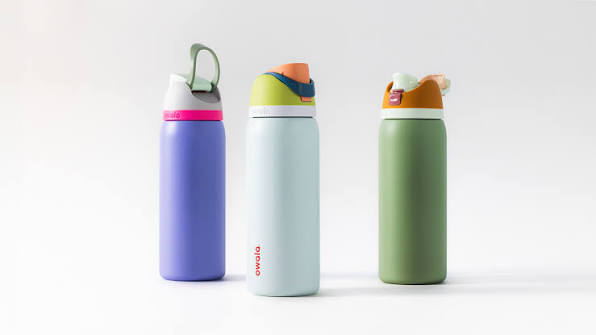
If you are asking are Owala water bottles dishwasher safe or typing are owalas dishwasher safe, the short answer is: it depends on the material and the part.
According to Owala’s official FAQ, stainless steel Owala lids are top-rack dishwasher safe, and straws can go in the silverware bin. The stainless steel cup or bottle body is technically dishwasher safe, but Owala strongly recommends hand washing it to preserve the exterior finish. For Eastman Tritan plastic Owala bottles, all parts are top-rack dishwasher safe.
For consumers, that means you can usually wash lids and straws in the dishwasher, but you should hand wash the stainless steel body if you want it to look good for longer. For B2B buyers, the bigger lesson is that “dishwasher safe” should never be a vague marketing claim. It should be defined by material, part, coating, logo method, test temperature, detergent, cycle count, and post-wash inspection.
Brand and IP note: Owala and FreeSip are protected brand and product names. Everich Hydro is not affiliated with Owala and does not manufacture unauthorized Owala-branded products. Everich Hydro supports original private-label and OEM/ODM bottle projects with comparable quality targets, defined through material selection, testing, and product specifications.
Which Owala Parts Can Go in the Dishwasher?
Here is the practical breakdown.
| Owala part or material | Dishwasher guidance | Best practice |
|---|---|---|
| Stainless steel lid | Top-rack dishwasher safe | Remove and clean small parts, then dry fully before reassembly. |
| Straw | Dishwasher safe in the silverware bin | Rinse first and use a straw brush if residue is trapped inside. |
| Spout gasket or small removable parts | Clean separately | Remove where possible, wash carefully, and let everything dry. |
| Stainless steel cup or bottle body | Technically dishwasher safe, but hand washing is recommended | Hand wash with warm, soapy water to protect the finish. |
| Eastman Tritan plastic bottle | All parts top-rack dishwasher safe | Place parts securely on the top rack and avoid high-heat abuse. |
| Painted or coated exterior | Use caution | Hand washing helps preserve color, logo, and surface finish. |
The safest consumer rule is simple: dishwasher for lids, straws, and Tritan parts; hand wash stainless steel bodies.
This answer also explains why product labels can feel confusing. A stainless steel bottle body may survive dishwasher exposure, but repeated heat, detergent, and water pressure can still wear the coating or decoration faster than hand washing.
Why Owala Recommends Hand Washing Stainless Steel Bodies
Stainless steel is durable, but a finished stainless steel bottle is more than bare metal. It may include powder coating, spray paint, printed logos, silicone seals, plastic lid components, adhesives, and a vacuum-insulated structure. Those details are exactly why hand washing is often recommended for premium bottles.
Owala’s FreeSip product page describes the bottle as having a dishwasher-safe lid and a hand-washable cup. The official FAQ also explains that the stainless steel cup is technically dishwasher safe, but hand washing is strongly recommended to maintain the finish.
That distinction matters. A dishwasher does not only use water. It exposes the product to:
- High water temperature
- Strong detergent
- Water pressure
- Long wet cycles
- Drying heat
- Contact with other dishes or metal objects
For a stainless steel bottle, the main concern is usually not whether the steel itself can tolerate water. The concern is long-term appearance and performance. The exterior color may dull, printed logos may weaken, coatings may wear faster, and small lid or gasket areas may trap residue if they are not disassembled properly.
For B2C users, hand washing is the easiest way to keep the bottle looking new. For B2B buyers, this is an important product development lesson: if you want to sell a dishwasher-safe stainless steel bottle, the coating, logo method, lid structure, and sealing system must be tested as a complete product, not just as separate materials.
Stainless Steel Owala vs Tritan Plastic Owala: Cleaning Differences
Owala gives different cleaning guidance for stainless steel and Tritan plastic because the materials behave differently.
| Feature | Stainless steel Owala bottles | Tritan plastic Owala bottles |
|---|---|---|
| Dishwasher guidance | Lid top-rack safe; straw dishwasher safe; body best hand washed | All parts top-rack dishwasher safe |
| Main reason | Protect finish and appearance | Tritan plastic is designed for easier top-rack dishwasher cleaning |
| Best cleaning method | Warm, soapy water, soft sponge, bottle brush, thorough drying | Top rack dishwasher or warm, soapy water |
| What to avoid | Bleach, abrasives, metal brushes, microwave, boiling, freezing | Microwave, freezing, harsh chemicals |
| Buyer takeaway | Premium finish needs care | Plastic bottle convenience is stronger for dishwasher users |
For consumers, the right answer depends on your exact bottle. If your bottle is stainless steel and insulated, hand wash the body. If it is Tritan plastic, the top rack is generally acceptable based on Owala’s guidance.
For brands and retailers, this is also a positioning decision. Stainless steel offers a premium feel, better insulation, and strong perceived value. Tritan plastic offers clarity, lower weight, and easier dishwasher messaging. A custom bottle line can include both, but the care claims should be different.
How to Clean an Owala Bottle Safely at Home
A clean bottle is not only about the dishwasher. Many bottle odors and stains come from small areas such as the straw, gasket, spout, and lid recesses. Owala’s own cleaning guidance recommends warm soapy water, straw brushes, baking soda, and vinegar for deeper cleaning.
Use this safe routine:
- Disassemble the bottle.
Remove the lid, straw, and any removable gasket or small component. Do not clean the bottle as one sealed object. Hidden moisture and residue can remain in small spaces.
- Rinse after use.
If you used the bottle for anything other than water, rinse it as soon as possible. Tea, coffee, juice, sports drinks, and flavored drinks can leave odor, sugar, or pigment residue.
- Wash the stainless steel body by hand.
Use warm water, mild dish soap, and a soft sponge or bottle brush. Avoid metal brushes because they can scratch stainless steel and damage the interior or exterior surface.
- Wash the lid and straw carefully.
The lid can go on the top rack of the dishwasher, but hand cleaning is still useful if residue collects around the spout or gasket. Use a straw brush for the straw.
- Use vinegar or baking soda for odor.
For deeper cleaning, use a baking soda paste or a diluted white vinegar soak. These methods are gentler than bleach and can help remove odor or residue.
- Rinse thoroughly.
Any cleaner left behind can affect taste. Rinse all parts with clean water.
- Dry completely before reassembly.
Let the body, lid, straw, and gaskets air dry fully. Reassembling while damp can trap moisture and encourage odor.
If you use the bottle daily, a quick wash every day and a deeper clean weekly is a smart routine.
What Not to Do With an Owala Bottle
Some cleaning mistakes can damage a bottle faster than normal use.
Do not microwave stainless steel bottles. Stainless steel and microwaves do not mix, and Owala’s FAQ clearly says stainless steel bottles should not be microwaved.
Do not use bleach. Owala’s cleaning article warns against bleach because it can damage materials and leave residue that is difficult to rinse away.
Do not use metal brushes. Metal brushes can scratch stainless steel surfaces. Use a soft bottle brush or sponge instead.
Do not freeze the bottle as a shortcut for cold drinks. Owala recommends using ice cubes instead. Expanding liquid can stress or damage bottle parts.
Do not boil the bottle unless the product care guide specifically says it is allowed. High heat can affect seals, plastic components, coating, and lid fit.
Do not assume all “dishwasher safe” claims mean the same thing. One product may mean the lid is safe on the top rack. Another may mean the entire bottle body can pass repeated dishwasher cycles. Always check the exact product care instructions.
B2B View: What Dishwasher Safe Should Mean in Bottle Manufacturing
For B2B buyers, “dishwasher safe” should be a specification, not a slogan.
Before placing a bulk order, buyers should define exactly what they expect:
- Is the full bottle dishwasher safe, or only the lid?
- Is it top-rack dishwasher safe only?
- How many dishwasher cycles should the product pass?
- What water temperature and detergent will be used in testing?
- Should the test include drying cycles?
- Should the logo survive without fading, cracking, or peeling?
- Should the coating show no obvious color change?
- Should the bottle remain leak-free after washing?
- Should the lid, straw, button, gasket, and hinge still function normally?
- Should the vacuum insulation remain stable after repeated cleaning?
Everich Hydro’s article on dishwasher testing for stainless steel water bottles describes a practical testing approach for stainless steel drinkware, including repeated dishwasher cycles, temperature control, detergent, appearance checks, coating checks, leakage checks, and functional inspection after washing.
This is important because a dishwasher-safe claim affects more than cleaning. It affects customer reviews, returns, retailer compliance, product liability, and brand trust.
For example, a buyer may choose laser engraving instead of certain printed logos if dishwasher durability is a priority. A buyer may choose a simpler lid structure if the product is aimed at families who want easy cleaning. A buyer may choose Tritan plastic for a lightweight dishwasher-friendly line, or stainless steel for a premium insulated line where the care label recommends hand washing the body.
Good manufacturing starts by deciding which claim is truthful and testable.
Can You Source Owala-Level Quality Expectations? A Safer B2B Answer
Many buyers ask whether a custom bottle manufacturer can help them reach Owala-level quality expectations. The safer and more professional answer is: you can target comparable quality standards, but the product must be original, properly specified, and tested.
Quality is not a single sentence. It is a set of decisions:
- Material grade
- Stainless steel thickness
- Vacuum insulation performance
- Tritan or plastic resin quality
- Lid design and gasket material
- Leak-proof structure
- Drinking spout comfort
- Ease of cleaning
- Surface finish
- Color stability
- Logo durability
- Dishwasher test requirements
- Drop test requirements
- Food-contact compliance
- Packaging protection
- Final inspection standard
Brands should also respect intellectual property. Owala’s legal page states that Owala products are protected by patents, designs, and trademarks. That means B2B buyers should not use Owala’s brand name, protected product names, patented mechanisms, product photos, packaging, or confusingly similar design elements.
The better path is to build an original private-label product that meets your market’s quality expectations. You can benchmark leading bottles for user needs, such as leak resistance, easy cleaning, carry comfort, dishwasher-safe lid design, color appeal, and insulation performance. Then your manufacturer can help turn those goals into a differentiated product specification.
This is where Everich Hydro fits: not as an Owala supplier, but as a custom drinkware manufacturer for original OEM/ODM development.
How Everich Hydro Supports Custom Dishwasher-Safe Bottle Projects
Everich Hydro is a wholesale stainless steel drinkware manufacturer supporting global brands, retailers, wholesalers, and private-label buyers. For brands that want premium bottle quality without copying Owala, Everich Hydro can help develop original custom water bottles with defined materials, structure, finish, packaging, and testing.
For B2B projects, Everich Hydro can support:
- Custom water bottle development
- OEM and ODM drinkware projects
- 18/8 stainless steel insulated bottles
- Tritan plastic bottle projects
- BPA-free lid and straw components
- Custom lid concepts
- Surface finish and color development
- Logo printing, laser engraving, and decoration
- Retail packaging and bulk packaging
- Compliance support for markets such as the US and EU
- Quality control from sampling to bulk production
Everich Hydro’s quality control process includes checkpoints such as appearance inspection, heat preservation testing, leak testing, drop impact testing, and dishwasher safe testing. These checks help buyers turn product claims into measurable standards.
If your project needs plastic bottles, Everich Hydro’s Tritan water bottle wholesale page is relevant for BPA-free, lightweight, dishwasher-friendly bottle programs. If your project needs insulated stainless steel bottles, the wholesale stainless steel water bottle manufacturer page is a better starting point.
Buyers can also review Everich Hydro’s custom water bottles in bulk service and water bottle manufacturing process to understand how concept development, material selection, sampling, production, testing, and inspection work together.
The right goal is not to make a copy. The right goal is to build a bottle that matches your brand, your channel, and your care promise.
Conclusion
So, are Owala water bottles dishwasher safe?
Yes, but the answer depends on the material and part. For stainless steel Owala bottles, the lid is top-rack dishwasher safe, the straw can go in the silverware bin, and the stainless steel cup or body is best hand washed to preserve its finish. For Eastman Tritan plastic Owala bottles, all parts are top-rack dishwasher safe.
For consumers, hand washing the stainless steel body is the safest way to protect the color, coating, logo, and long-term appearance.
For B2B buyers, the lesson is bigger: dishwasher-safe drinkware needs clear specifications and testing. If you want to develop bottles with comparable quality expectations to Owala, define the material, lid structure, coating, logo method, dishwasher test, leak test, drop test, and compliance requirements before mass production.
Everich Hydro can help brands develop original custom water bottles, stainless steel insulated bottles, Tritan bottles, lids, packaging, and quality-tested OEM/ODM drinkware programs for global markets.
FAQ
Are Owala water bottles dishwasher safe?
Yes, but it depends on the model and part. Owala says stainless steel lids are top-rack dishwasher safe, straws can go in the silverware bin, and stainless steel cups are best hand washed. Eastman Tritan plastic bottles are top-rack dishwasher safe for all parts.
Are Owalas dishwasher safe if they are stainless steel?
Partly. The lid and straw can usually go in the dishwasher, but the stainless steel body should be hand washed if you want to preserve the finish.
Can I put the Owala lid in the dishwasher?
Yes. Owala says lids are top-rack dishwasher safe. For a deeper clean, remove the gasket where possible and clean small spaces with a sponge or brush.
Can I put an Owala straw in the dishwasher?
Yes. Owala says the straw can go in the dishwasher’s silverware bin. If the straw has residue inside, use a straw brush before or after dishwashing.
Why does Owala recommend hand washing the cup?
Hand washing helps preserve the exterior finish of stainless steel cups and bottles. Dishwashers use heat, detergent, pressure, and long wet cycles that can wear coatings, color, or decoration faster over time.
Can Everich Hydro make bottles with comparable quality to Owala?
Everich Hydro can help B2B buyers develop original bottles with comparable quality targets, such as 18/8 stainless steel, Tritan, BPA-free components, leak testing, dishwasher testing, coating checks, and custom packaging. The final quality level depends on the approved specification, materials, testing plan, and inspection standard.
Can Everich Hydro manufacture Owala bottles?
Everich Hydro is an independent custom drinkware manufacturer and is not affiliated with Owala. It does not manufacture unauthorized Owala-branded products. It supports original private-label and OEM/ODM bottle development for brands that need their own designs.